Table of Contents
When Retirement Dreams Become Nightmares Due to Fraudulent "Investors"
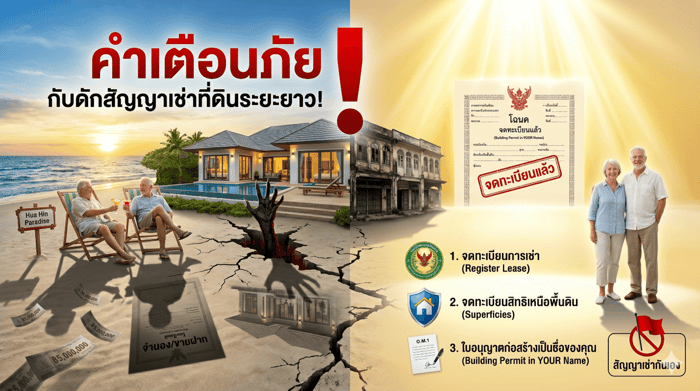
For many expats, Hua Hin is a paradise for retirement. However, we have recently represented more than 10 clients who fell victim to the same sophisticated scam—The "Long-Term Land Lease" Trap, nearly losing their life savings and the homes they built with their own hands.
🚩 Modus Operandi: How the Scam Works
Scammers often pose as "Real Estate Developers" or "Nominee Companies" with a calculated plan:
- The 30-Year "Pre-paid" Land Lease Offer: Since foreigners cannot own land in Thailand, scammers offer a 30-year lease with a demand for a multi-million Baht upfront payment. They often claim: "Pay once and stay for life."
- Construction Phase: Once the client trusts them and invests their savings to build a luxury villa, the value of the land skyrockets because of the new structure.
- The Secret Mortgage: While the expat is living happily in their new home, the scammer (who still holds the legal title deed) secretly mortgages the land or enters into a "sale with right of redemption" (Kai-Fak) with private lenders, using the increased value of the property as collateral.
- Foreclosure and Eviction: When the scammer defaults on the loan and disappears, the lender forecloses on the land. The expat is suddenly served with an eviction notice, discovering that "their house" is being seized along with the land.
⚖️ Why the Law Fails to Protect Unregistered Tenants
In Thailand, Land and Buildings can be owned by different people. However:
- The Main Risk: If you only sign a "Private Contract" without registering it with the authorities, your rights are minimal. You cannot legally defend your possession against a "Third Party" (such as a lender who took the mortgage in good faith).
🛡️ How to Protect Yourself (3 Golden Rules of Thai Law)
If you intend to lease land to build a house, you MUST follow these legal procedures:
1. Register the Lease at the Land Office
(Pursuant to Section 538 of the Civil and Commercial Code) Thai law is clear: Any lease longer than 3 years "is not enforceable by action unless it be made in writing and registered by the competent official."
- Why?: Once registered, the lease becomes a "Real Right" attached to the property. According to Section 569, a lease of immovable property is not extinguished by the transfer of ownership. Even if the land is sold or foreclosed, the new owner must honor your lease until the 30-year term expires.
2. Register "Superficies" (Sitti-Nuea-Peun-Din)
(Pursuant to Section 1410 of the Civil and Commercial Code) This is the strongest protection for a foreigner building a house on someone else's land. The law states: "The owner of a piece of land may create a right of superficies in favor of another person by giving him the right to own buildings, structures, or plantations upon or under the land."
- Why?: Usually, under the principle of "Component Parts" (Section 144), the landowner owns everything built on the land. Registering a Superficies legally separates the house from the land. The house becomes your absolute property, which can even be transferred to heirs. This right must also be registered on the back of the Title Deed (Chanote).
3. Ensure the Building Permit is in YOUR Name
(Pursuant to the Building Control Act) The Building Permit (Form A.1) is the most critical evidence of who owns the structure.
- Why?: To prevent disputes over "Component Parts" under Section 146, which exempts structures built by a person who has a right over another person's land. Having the Building Permit and the Yellow House Registration Book (Tabien Baan) in your name proves you built the house under a legal right, making it difficult for scammers or lenders to claim ownership of your home.
🚩 The Ultimate Red Flag
Scammers often say: "Registering at the Land Office is complicated and involves high taxes; a private contract is enough." This is a major Red Flag. Paying millions of Baht without a registered entry on the back of the Title Deed puts your entire investment at risk if the land changes hands.
📢 Advice for Those Facing This Crisis
If you have received a court notice or discovered that your leased land has been mortgaged:
- Do Not Move Out: Immediately gather all evidence of construction payments and your lease agreements.
- Consult a Lawyer Immediately: Thai law provides avenues to fight based on "Possessory Rights" or "Undue Enrichment," but you must act before the legal deadlines pass.
Do not let your retirement fund become a scammer's windfall. Before signing any documents or transferring funds, always consult an independent legal advisor not the lawyer provided by the developer.